
1. Why Studying Bubble Dynamics Matters
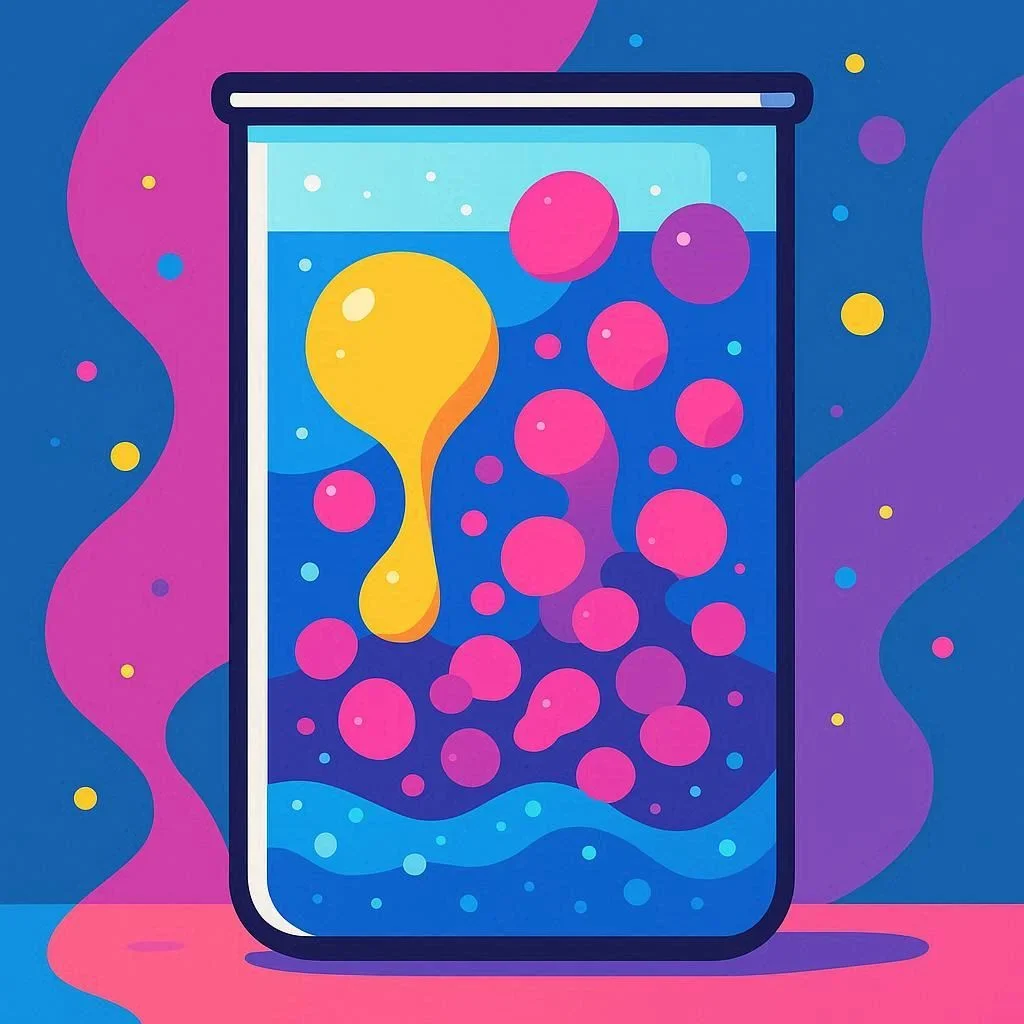
Bubble dynamics \u2013 the study of how bubbles form, grow, and burst may sound whimsical, but it lies at the heart of many scientific and industrial processes. From the delicate dance of soap bubbles in a classroom to the complex bubble\u2010laden flows in chemical reactors, mastering their behavior unlocks insights into fluid dynamics, material science, and even space science.
📱 Download Our Apps on Google Play
Click any app below to install it from the Google Play Store.


- Industrial relevance: Bubble\u2010mediated processes control gas liquid reactions in wastewater treatment, oil recovery, and pharmaceutical manufacturing.
- Environmental impact: Understanding bubble formation helps predict micro-bubble transport in oceans, influencing air-sea gas exchange and climate regulation.
- Educational value: Giant bubbles provide an engaging, hands-on demonstration of surface tension, viscosity, and turbulence for K\u2010\u2010C and university labs.
Bubble dynamics on Wikipedia offers a concise overview that blends these real-world drivers with fundamental theory.
2. Key Concepts of Bubble Physics
Bubble behavior hinges on a handful of physical principles. Grasping them will elevate both your experiment design and your appreciation of everyday phenomena.
2.1 Surface Tension
Surface tension is the force that makes a liquid surface behave like a stretched membrane. It\u2019s what allows a soap film to minimize its area, holding air inside a thin bubble.
- Quantitative measure: 0.072 N/m for clean water at 20\,°C.
- Effect on bubbles: The greater the surface tension, the more elastic the film; low-tension solutions yield larger, longer-lasting bubbles.
- Reference: Surface tension on Wikipedia.
2.2 Coalescence and Stability
Coalescence occurs when two bubbles merge, often releasing trapped air. Stability is the bubble\’s resistance to collapse, governed by film thickening, surfactant presence, and pressure differentials.
- Surfactants: Soap molecules lower surface tension and create a shell that resists coalescence.
- Marangoni effect: Gradients in surface tension drive fluid flow along the film, helping dampen perturbations.
- Key study: Bubble stability in biophysics journals (accessible through institutional subscription; core concepts are widely cited).
3. Tools and Materials for Giant Bubble Experiments
Crafting a bubble the size of a soda can requires patience and the right ingredients. Below is a \u2018starter kit\u2019 for budding fluid‑dynamicists.
| Component | Typical Spec | Why It Matters |
|———–|————–|—————-|
| Soap solution | 1\,L water, 200\,mL dish soap, 2\,T corn syrup | Silicone additives reduce surface tension; corn syrup thickens the film. |
| Bubble wand | 10\,cm\,\times\,10\,cm glass plate or stainless-steel mesh | Mesh geometry influences the bubble shape; a larger plate captures more surfactant. |
| Foam cutter | 2\,mm silicone-sealed blade | Allows precise cutting of film edges, minimizing defects. |
| Light source | LED panel 650\,nm | Enhances visibility of film deformation under stress. |
| Camera | DSLR or smartphone with a tripod | Records bubble lifecycle for later analysis. |
| Temperature gauge | ±0.1\,°C digital probe | Small temperature swings dramatically shift surface tension. |
Creating Giant Bubbles lesson plan (Rock Classroom) offers printable handouts and safety guidelines for classrooms.
4. Step‑by‑Step Guide to Making Giant Bubbles
Follow this protocol to produce a bubble that\u2019s the size of a dinner plate.
- Prepare the solution: Mix water, dish soap, and corn syrup until fully integrated. Avoid over\u2010stirring to prevent foaming.
- Soak the wand: Immerse the bubble wand in the solution for 30\,s; this saturates the mesh.
- Form the film: Slowly lift the wand at a 45° angle, drawing a film toward the solution trough.
- Stabilize: Use a gentle hand to maintain film tension.
- Release: Slowly lower the wand to form the bubble at the interface. The bubble will rise as it gains volume.
- Observe: Note the bubble\u2019s growth—typically 15\,\u2013\,30\,s before bursting.
Optional: Introduce a 1\% glycerol additive for extra durability.
The process looks simple, but careful control of wet vs. dry film edges, ambient humidity, and even atmospheric pressure will affect the outcome. Refer to Scientific American’s \u201cThe Physics of Bubbles\u201d for deeper insights into the fluid mechanics involved.
5. Measuring and Analyzing Bubble Size and Lifespan
Quantification transforms a delightful trick into a scientific experiment.
- Diameter measurement: Use side-by-side calibration rods under the camera.
- Time tracking: Annotate the frame number corresponding to bubble creation and collapse.
- Surface tension calculation: Apply the Young\u2010Laplace equation [\Delta P = 2\gamma/R] where [\Delta P] is the pressure difference, [\gamma] the surface tension, and [R] the bubble radius.
- Data plotting: Graph radius vs. time to see the decay curve.
- Statistical analysis: Perform t-tests comparing different surfactants or temperatures.
Software like ImageJ (free, open-source) assists in extracting pixel-based measurements, which can be translated into real-world units via the camera calibration.
For an academic protocol, see IEEE’s Bubble Dynamics Lab Manual (abstract available freely).
6. Common Challenges and How to Overcome Them
| Issue | Cause | Fix |
|——-|——-|—–|
| Bubble pops instantly | Too much soap \u2013\u2013 reduces film thickness | Add corn syrup or reduce soap concentration |
| Bubbles never form | Low humidity \u2013\u2013 film dries too fast | Increase ambient humidity or apply a humidifier |
| Surfactant film cracks | Uneven coating | Soak wand longer, then spin to remove excess |
| Variable bubble size | Fluctuating temperature | Maintain constant room temperature (~22\,°C) |
| High burst frequency | Over‑agitation | Raise wand slowly and keep steady hand |
Even seasoned experimenters encounter these hiccups; systematic troubleshooting is the hallmark of scientific rigor.
7. Real‑World Applications of Bubble Dynamics
Beyond the classroom, bubble dynamics informs groundbreaking technologies.
- Medical imaging: Contrast agents use microbubbles that scatter ultrasound for clearer diagnostics.
- Fire suppression: Bubble-filled foams in firefighting blankets trap heat and smother flames.
- Oceanography: Predicting air-sea gas exchange relies on models of bubble production from waves.
- Aerospace: NASA\u2019s studies of bubble coalescence at microgravity conditions guide onboard life‑support fluid systems. NASA’s Bubble Dynamics Experiment outlines how bubbles behave in zero\u2010g.
- Chemical reactor design: Adjusting bubble size optimizes gas-liquid contact in fermentation processes.
Each domain uses the same core physics principles; understanding them allows engineers to tailor processes for efficiency and safety.
8. Fun Experiments and Extensions
Take your bubble hobby to the next level with these creative variations.
- Color‑changing bubbles: Add food coloring to the soap solution and watch hues shift as the film expands.
- Bubbles in magnetic fields: Place iron filings around your wand to visualize airflow patterns as the bubble rises.
- Bubble \u201csnow\u201d: Create a fine spray of micro-bubbles and blow them into a cold room; they\u2019ll condense into a sparkling \u201csnow\u201d effect.
- Tethered giant bubble: Attach a silk thread to the back of a giant bubble; observe gravitational influences on film stability.
- Temperature gradient test: Place one side of the wand on a warm platform and the other on a cool platform; the bubble will drift toward cooler air, illustrating thermal Marangoni flows.
These projects not only enhance engagement but also reveal subtle fluid‑dynamic phenomena that textbooks often gloss over.
9. Resources and Further Reading
- Textbooks:
- \u201cFluid Mechanics\u201d by Frank M. White \u2013 chapters on surface tension.
- \u201cIntroduction to Fluid Dynamics\u201d by Robert W. Fox \u2013 bubble dynamics section.
- Online courses:
- MIT OpenCourseWare: Course 2.08 Fluid Mechanics – includes modules on interfacial phenomena.
- Scientific journals:
- \u201cPhysics of Fluids\u201d (American Physical Society).
- \u201cJournal of Colloid and Interface Science\u201d (Elsevier).
- Educational kits:
- \u201cGreat Bubble Science Lab\u201d from Science Labs \u2014 a hands‑on experiment package.
10. Conclusion: Dive Deeper Into the World of Bubbles
Bubble dynamics is more than a playful pastime; it\u2019s a gateway into the mechanics that sculpt our planet and power modern technology. By mastering giant bubble creation, you engage directly with concepts of surface tension, coalescence, and fluid stability—tools that are as applicable in a science classroom as they are in sophisticated industrial settings.
Now that you know the theory, the materials, and the step‑by‑step process, the next challenge is to experiment, measure, and perhaps even share your findings.

100+ Science Experiments for Kids
Activities to Learn Physics, Chemistry and Biology at Home
Buy now on Amazon
Advanced AI for Kids
Learn Artificial Intelligence, Machine Learning, Robotics, and Future Technology in a Simple Way...Explore Science with Fun Activities.
Buy Now on Amazon
Easy Math for Kids
Fun and Simple Ways to Learn Numbers, Addition, Subtraction, Multiplication and Division for Ages 6-10 years.
Buy Now on Amazon🚀 Try These Free Android Apps
Download these useful apps directly from the Google Play Store.